
Wilderness Survival Training: Practicing Resourcefulness

Pause to calm down and organize your thoughts. This will be time well spent.
You are your greatest resource in a survival situation
When traveling into the backcountry we should all be as prepared as possible. This includes carrying a decent survival kit. At a minimum this should include more than one way to start a fire, a means for purifying and holding water, and some form of protective cover such as a trash bag, emergency wrap, or bivvy bag.
What if you don’t have these things or if you need something beyond what you thought to bring? This is where thinking creatively can serve you well, perhaps even save your life.
Establish survival priorities
In all likelihood, you will be concerned with more than one thing. Do you need to make a shelter, find water, or signal for help? You can only do one thing at a time and chances are good that one thing is more important than the others.
Take a few minutes to breathe deeply and calm yourself. This will go a long way toward using your resources effectively. Decide what your most important action will be, then focus your efforts on that thing.
Next, consider that the nature of the questions you ask yourself will have a huge impact on the number and quality of solutions that present themselves. Ask yourself questions — out loud, if necessary — to generate ideas. Don’t judge these ideas harshly. Try to come up with as many ideas as you can that address the priority you have set.
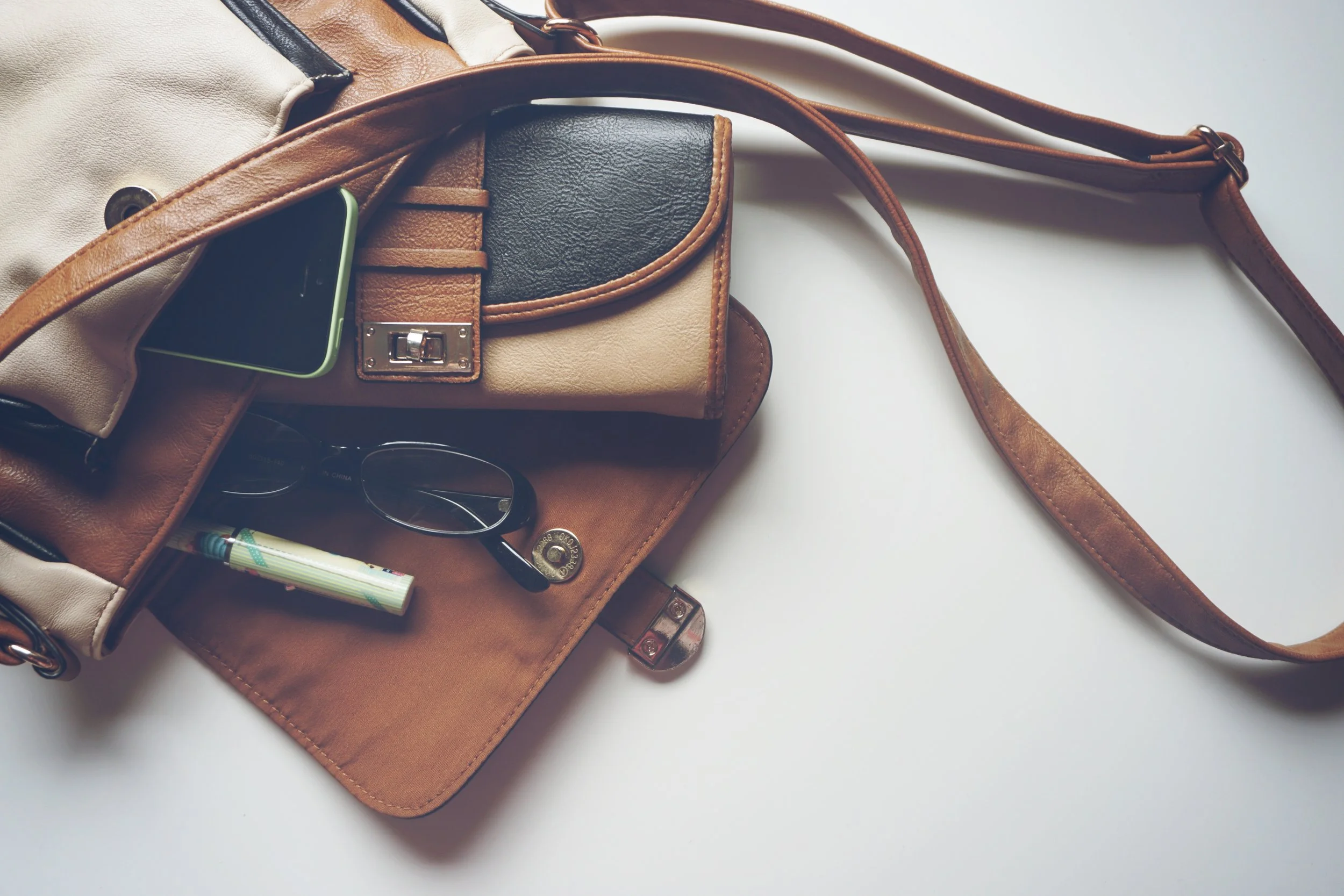
Take inventory what you have and consider all of the ways it might be used
What do you need to do to survive?
Let’s say you have determined that you need to start a fire. Certain options will surely come to mind first: lighter, matches, or a ferro rod. These are good options, but there are many more ways to start a fire.
If you don’t have the most obvious means for starting a fire make a list of all of the methods you know of. This could jog your memory and open up additional viable options. Perhaps you’ve made a bow drill fire before? If so, you have an additional avenue to explore.
What do you have on you to help you survive?
Creating a bow drill fire requires some type of rope or cord. Others things will work, however. Take an inventory of what is in your survival kit, car, pack, your pockets, purse, wallet, and your clothes themselves, looking for options. For a bow drill cord I have used a belt, a bandana, clothing, cattail cordage, cedar roots, a rifle sling, and a plastic grocery bag. There are plenty of other things that would work as well.

What resources might you be able to scavenge from the things around you?
Pro tip: Play with alternative uses for things when you aren’t in an emergency situation. This can be a fun exercise. A car key can be used as a crude saw, chapstick can lubricate a bearing block, and a purse strap might work as a bow drill cord. Get good at using alternate types of gear.
What can you find to survive?
Sadly, human garbage is almost everywhere. Many human-made materials have properties that are difficult to find in nature. Search the area for signs of human activity: old foundations, fence lines, roadsides, logged areas, junked cards, and anywhere that humans might have been. You may find something.
Depending on your needs, even a small piece of something might make a huge difference. Finding a few feet of sturdy cordage suddenly makes a bow drill fire much more feasible.
Pro tip: In addition to practicing well-known survival techniques, look into survival hacks that make creative use of the items around you to survive.

Consider not only the object, but also its parts and contents. You need to weigh the value of the intact object against the value it might provide if compromised.
How can you use an item or its parts?
The best use of the things you have at hand, may require you to ruin those objects. Perhaps you need to break your eyeglasses to put the lenses together back-to-back to focus the sunlight for a solar ignition. Perhaps there is a battery inside an electronic device that could be used to make a spark. You need to weigh the value of the intact object against the value it might provide if compromised. Remember, most things can be replaced.
I have torn the hem off of my t-shirt, soaked it in water, and twisted it to create a strong cord for a bow drill fire. Yes, that t-shirt was ruined, but in a bad situation, this would be a worthwhile sacrifice.
What can you do instead?
Don’t be too set in your ways. Keep your eyes and your mind open to things that might work. Don’t be too quick to abandon ideas.
As an example, I was once using a bow drill set with a pine spindle and hearth. I had a hard piece of oak for the bearing-block. As I struggled to get an ember, I noticed that the oak bearing-block was smoking more than the hearth. While I couldn’t account for this unusual phenomenon, I could exploit it. I flipped the whole set over, using the bearing-block as the hearth and the hearth as the bearing block. I was able to get a glowing ember using the new configuration.
You have more resources to survive than you realize
We all tend to see and use things in limited ways. Looking beyond those limits could save your life in a wilderness survival situation. I hope this article has helped you see that you probably have more resources — both mental and physical — than you realize.
Until next time, keep learning!
-Dug North
EXERCISE: Practicing resourcefulness with the bow drill friction fire
Here’s a video of me practicing resourcefulness. I create a glowing bow drill ember with some items that you don’t normally use for a friction fire. Please note: this is NOT a survival technique! I am definitely not proposing that you carry a coat hanger, beer bottle, and plastic bag into the woods with you. Rather, this is an example of using resources in unconventional ways.
Resources
Surviving the Wild by Joshua Enyart
Survival Hacks: Over 200 Ways to Use Everyday Items for Wilderness Survival by Creek Stewart
Creative Thinking: A Field Guide to Building Your Strategic Core by Angus Fletcher
The Bow Drill Bible by Leigh Robinson
Understanding the Fire Triangle and learning to use it when starting a fire
Understanding the Fire Triangle
Whether it is for camping, bushcraft practice, a survival situation, or just backyard socializing, lighting a fire can be difficult. As simple as fire starting may appear to be, there are many variables at play. With a better understanding of these variables, the process of starting a fire becomes less mysterious. One model that’s often used to understand the process is called the fire triangle.
This is the first in a two part article on the fire triangle and how we can use it to better understand what is happening when we attempt to light an open fire.
What is the Fire Triangle?
The fire triangle is a model used to represent the three main components that must be present to make and sustain a fire. These elements are heat, oxygen, and fuel. Why a triangle? There’s no real reason other than the fact that there are three elements and that can be represented graphically with a three-sided shape -- the triangle.
Heat: Spark, Ember, and Flame
Let’s say you have some dry wood sitting on the ground and exposed to the air. Why doesn’t it burst into flames spontaneously? The reason is we still need the third side of the fire triangle, heat, to jump-start the process we call fire.
Heat can be introduced into the triangle in a number of ways. It may be the ember from a bow drill, the spark from a ferrocerium rod, light from a magnifying glass, or the flame from a lighter or match.
Oxygen: The Gas Needed for Combustion
The next part of the triangle is oxygen. The air around us is made up of about 21% oxygen -- exactly what we need to create fire. At times we may encourage more air to enter the system by blowing on the fire, fanning it, or creating physical structures that promote air flow.
Technically, there are other gasses that can be used to sustain fire, but in the context of an outdoor fire, we can ignore these for the most part.
Fuel: Tinder, Kindling, and Firewood
The final element in the fire triangle is fuel. For an outdoor fire, this means tinder, kindling, and firewood.
Our initial fuel is known as tinder. Tinder is a fine, often fluffy material capable of taking a small amount of heat and turning it into flame. Some tinder materials contain flammable compounds while others have very small fibers that are easy to heat up. Tinders may be natural or some form of human-made tinder.
After the tinder, we make use of kindling — matchstick to marker sized sticks — and then work our way up to pieces that are larger still: firewood.
The Chain Reaction of Combustion
When heat is applied externally to a fuel such as wood, the cellulose in the wood begins to undergo a type of thermal decomposition called pyrolysis. As the chemical structure of the wood decomposes, certain gasses are released or volatilized.
These gasses react vigorously with the oxygen in the air in a process called combustion. This is another way of saying that we have lit the fuel on fire.
Combustion is an exothermic reaction, which means it gives off heat. Because it does so, it reinforces the continuation of the process. Provided that adequate fuel and oxygen continue to be provided, we have started a chain reaction.
The cycle repeats: preheating of the fuel, gasses being released, and those gasses reacting with oxygen. If everything goes according to plan, the chain reaction continues with larger and larger pieces of fuel putting off more and more heat. Eventually, we have a fire large enough to heat up and ignite fairly large pieces of wood.
With a hot bed of coals established, we can add fuel of almost any size. Why? Because the coals are putting off a tremendous amount of heat and will be capable of starting the process of pyrolysis, which sets the stage for more combustion.
How to Make use of The Fire Triangle
In part 2 of this series, we’ll take a look at how the fire triangle can be used to troubleshoot problems we often encounter when lighting a fire outdoors.
Resources
| Spark Sources | Flame Sources | Other Sources |
|
|
|
|
| Natural Tinder | Human-made Tinder | Improvised Tinder |
|
|
|
|
* Some of the links on this page go to Amazon and some go to the website of my friend The Gray Bearded Green Beret. I make a small commission on all referrals.
12 Holiday Gifts for the Wilderness Adventurer
The holidays are here again, which means it’s time to ponder gifts. Here’s a list of gifts for the outdoor lovers in your life. I’ve tried to focus on gifts that are fairly small in size and around $50 or less. Some of the links below go to Amazon and some go to the website of my friend The Gray Bearded Green Beret. I make a small commission on all referrals. That said, these really are some of my absolute favorite products.
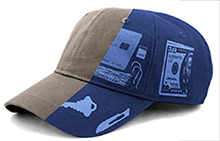
Wazoo Cache Cap
I love these baseball hats by Wazoo Survival Gear. Each hat has four cleverly designed hidden pockets for storing small items. I have stashed kevlar cord, water purification tablets, duct tape, and even a small knife in mine. They come in a variety of colors including gray, green, tan, and camouflage.
Pro tip: Get the most out of the hat with this bundle, which includes the Wazoo Cache Cap and a small ferro rod and striker combo designed to fit into small slots sewn into the edges of the bill. This version also has a velcro spot on the crown for a patch of your choice.

UCO Titan Stormproof Matches and Case
These jumbo 4-inch long matches are nothing like the flimsy “waterproof” matches I used as a kid. Each match will burn for over 20 seconds. The added time and heat can be crucial if you are working with tinder that is less than perfect. These things are so badass that they will relight after being submerged in water. It is true; I have seen it first hand.
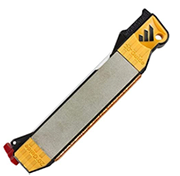
Work Sharp Guided Field Sharpener
This little knife sharpener is about the size of a harmonica. It features two diamond hones, an adjustable ceramic hone, and a leather strop. Best of all are the integrated angle guides. These little ramps make it much easier to keep the blade at a perfect 20 degree angle as you move it across the various hones. The addition of a leather strop is next level stuff. Once a proper angle has been put on a knife, we should all be stropping a lot more and honing a lot less!
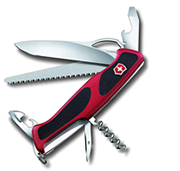
Victorinox RangerGrip 79 Swiss Army Pocket Knife
Victorinox still makes the best pocket knives in my book. This one puts the emphasis where it is needed: the knife and the saw. The blade on this can be opened with one hand and locks securely for safety. This model does NOT have a serrated blade. Serrations are a drawback for most cutting tasks. At a bit over 5 inches, this model is bigger than you might expect and this is helpful — especially when using the saw. The textured grip is another nice feature, as are the other foundational tools, which include a can opener, bottle opener/screwdriver, awl, and corkscrew. This knife gets top marks for utility and value.
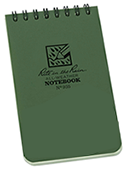
Rite in the Rain Weatherproof Notebook
A notebook might not sound a like a fun gift, but these are so practical and so functional it hardly matters. Outdoor people do stuff in the rain. It’s just how it is. If they happen to want to write anything down, plain old paper just doesn’t hold up. These notebooks do. I spent a long, wet day practicing land navigation in the rain. All of notes were taken on one of these notebooks and it worked beautifully.
Pro tip: I recommend that you get one of their thick lead mechanical pencils to make life even easier.

Tiny Survival Guide: A Life Insurance Policy in Your Pocket
This credit card size booklet unfolds like a map. While it’s no replacement for a full-size survival book, it does provide a lot of useful information. The guide includes dozens of tips with over 100 illustrations covering things like first aid, shelter, fire, water, navigation, signaling, knots, and specific environments. A little bit of guidance during a bad situation could be both helpful and comforting. If you are looking to take your gift to the next level, they also offer a bundle that comes with two booklets: Tiny Survival Guide and Tiny First Aid Guide.
Pro tip: Use the included plastic Fresnel lens to read the fine print in the booklet. It might also be used to start an emergency fire using sunlight.
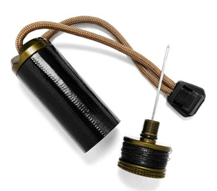
Exotac ripSPOOL Field Repair Kit
Exotac is one of those companies that really comes up with some innovative outdoor gear. The ripSPOOL is a perfect example of this, combining a heavy-duty sail needle, 30lb test synthetic braided line, and a roll of black repair tape. All of this comes in a compact, contained unit with a lanyard that itself is a specialty fire tinder.
Pro tip: Repair tape is flammable and makes a decent emergency tinder — especially when everything outside is wet.

Silky Gomboy Folding Saw
Silky makes a variety of multipurpose folding saws. Unlike western saws, these are based on a Japanese design that cuts on the pull stroke. This, along with some fancy hardened teeth, makes for a very smooth and very fast cutting action. Add to this a nicely textured, rubber-padded handle and you have one compact, but capable saw for the woodlands. They make a variety of sizes — and they are all good — but I find the Gomboy size to be the best balance between size and utility.

Wazoo The Bushcraft Fire Starter Necklace
Yup, there’s that Wazoo brand name again. What can I say? This company makes great stuff! This handsome little necklace holds a surprise: it can start a fire! Attached to the leather cord is a miniature ferrocerium rod and a ceramic striker. Simply scrape the rod with the striker to produce a shower of sparks. Works well with the Spartan Fire Tinder mentioned above.
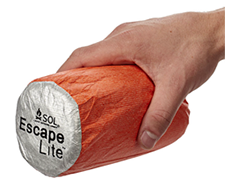
S.O.L. Emergency Escape Lite Bivvy
It’s common practice for people who spend time outdoors to carry a survival kit. One of the staple items in these kits is often the classic mylar space blanket. These have been improved in recent years by making them into a simple sleeping bag configuration. However, they have one major drawback: they do not allow moisture out. This means you can end up in an uncomfortably damp situation. The S.O.L. Escape Lite Bivvy provides the benefits of a space blanket — reflecting 70% of your body heat back — while allowing moisture to escape. The entire thing packs up to the size of a soda can.
Pro tip: The S.O.L. Escape Lite Bivvy can be used in as a slipcover for a sleeping bag. The bivvy helps insulate the sleeping bag and protect it from the elements.
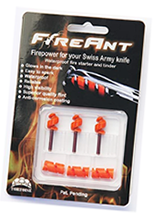
FireAnt Fire Starter and Tinder System for Swiss Army Knives
The smallest ferro rod and tinder combination I know of! Both items screw into the corkscrew on a Swiss Army Knife. The little orange rod and tinder are 100% waterproof so they should work when your back is against the wall. On a more day-to-day level, the FireAnt glows in the dark to help you find your knife at night. These come in packs with three or six pairs of rod and tinder. This gift pairs well with the Victorinox RangerGrip knife shown above.
Pro tip: you can also get a pack of just the FireAnt replacement tinder to replace the ones you’ve used.

Spartan Fire Multi-Use EDC Tinder
You have to love small, multipurpose items when you are in the wild. These flat, waxy strips fit that bill! Not only are they excellent waterproof fire tinder, but they can also be used to lubricate and protect gear. These fit easily in a wallet or in the Wazoo Cap mentioned above.
Pro tip: Spartan Fire Tinder can be heated up and used as an emergency repair patch on a tent.
Hopefully, you found some useful ideas in this list. If you have questions, drop me a line using the Contact page. If you found this useful, consider signing up for my email newsletter using the form at the bottom of the page. Thanks for stopping by!